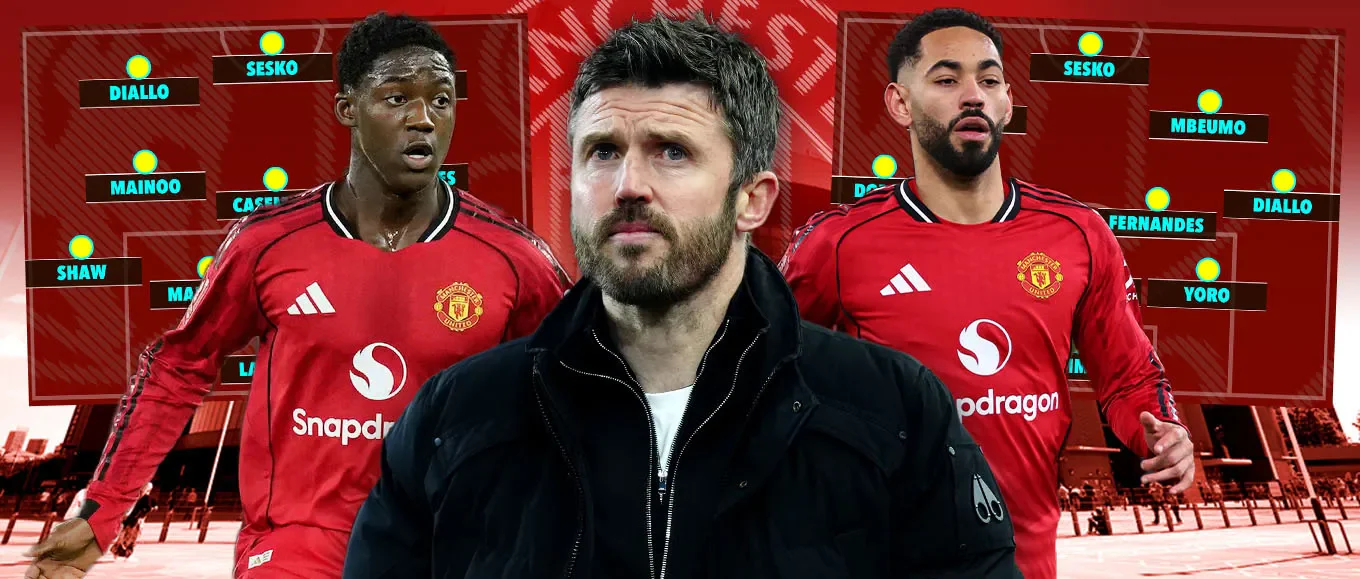
Michael Carrick is set to return to the Manchester United dugout as interim manager, with the former midfielder tasked with steadying the club once again. As United prepare for a crucial Manchester derby, attention has quickly shifted to how Carrick may set up his side.
Carrick previously took temporary charge in 2021 following Ole Gunnar Solskjaer’s departure and showed notable tactical flexibility during that spell. With United struggling for consistency, his willingness to adjust formations could prove vital.
A return to a traditional back four appears the most likely approach. Carrick could deploy either a 4-3-3 or a 4-2-3-1 system, with Bruno Fernandes operating as the central attacking midfielder behind Benjamin Šeško. The return of Amad Diallo and Bryan Mbeumo from AFCON could add pace and directness on the wings.
In midfield, Casemiro and Kobbie Mainoo are strong contenders to start, potentially edging out Manuel Ugarte. Their combination of experience and composure could help United regain control in key areas.
Defensively, Diogo Dalot is expected to feature, alongside Leny Yoro and Lisandro Martínez. With Matthijs de Ligt sidelined and Noussair Mazraoui unavailable, Carrick’s options are limited. At left-back, Luke Shaw is available again after being rested, while Patrick Dorgu remains an alternative following recent involvement.
Carrick may also consider continuing with a back three, a system previously used under Ruben Amorim. This would allow both Shaw and Dorgu to play together and provide additional defensive security, while creating competition for the right wing-back role.
For a more adventurous approach, Carrick could opt for a narrow 4-3-1-2 formation. This system would rely heavily on full-backs for width and could suit United’s central attacking options. Another alternative is a classic 4-4-2 diamond, offering balance and control while evoking memories of the club’s most successful era.
Ultimately, Carrick’s tactical decisions will be closely watched as United look to stabilise their season. Flexibility, structure, and clear roles will be key as he aims to make an immediate impact in his second spell as interim manager.