
Morocco has strengthened its case to co-host the 2030 FIFA World Cup after delivering a largely successful Africa Cup of Nations, easing concerns about its readiness for football’s biggest tournament.
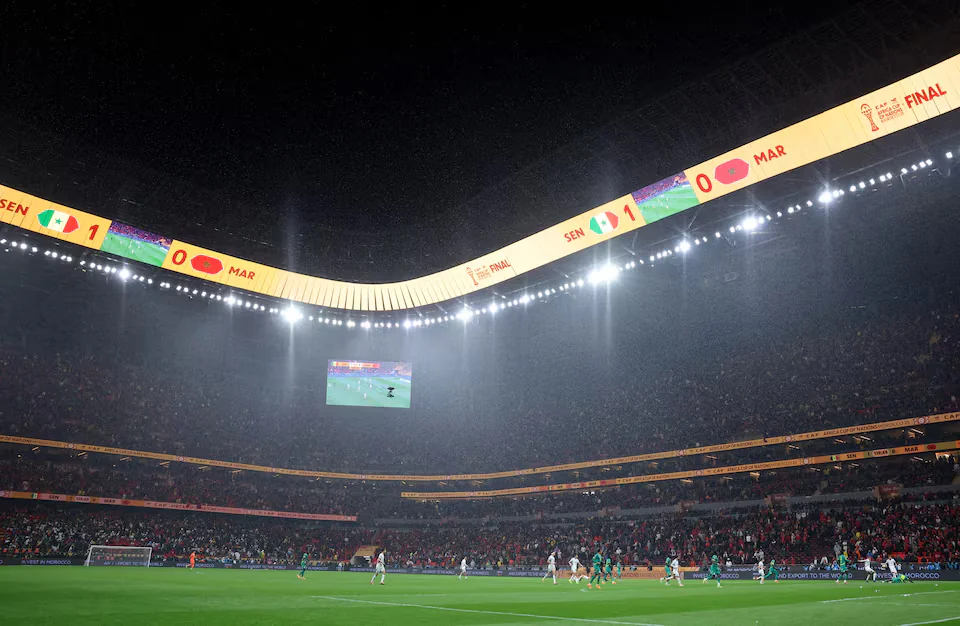
The 2025 AFCON, hosted across multiple cities, showcased modern stadiums, efficient transport links, and a strong tourism infrastructure, with the 24-team tournament running smoothly despite the dramatic ending to Sunday’s final in Rabat.
Morocco plans to use six stadiums for the 2030 World Cup, five of which were already tested during the Cup of Nations. Venues in Rabat, Tangier, Agadir, Fes and Marrakech provided high-quality playing surfaces and met international standards, while several are set for further upgrades ahead of the World Cup.
One of the standout facilities is the 75,000-capacity Grand Stade de Tanger, located less than an hour by ferry from Spain. Meanwhile, Morocco is also planning an ambitious new project — the proposed 115,000-seat Stade Hassan II near Casablanca, which the country hopes will be selected as the World Cup final venue ahead of Madrid’s Santiago Bernabeu.
In total, Morocco is expected to invest around $1.4 billion in stadium infrastructure alone. Significant improvements are also planned for airports, with direct air links already connecting several Moroccan cities to Europe, supported by expanding low-cost airline routes.
The country is also extending Africa’s only high-speed rail network, which currently links Tangier and Casablanca, with future plans to connect Marrakech and Agadir to further ease travel during the tournament.
However, the scale of infrastructure spending has not been without domestic challenges. Protests last year highlighted public frustration over poverty and access to social services, with demonstrators questioning priorities amid heavy investment in sports facilities.
Despite these tensions, Morocco continues to position itself as a leading football nation on and off the pitch. After their historic run to the semi-finals at the 2022 World Cup, the Atlas Lions will aim to build on that momentum at this year’s finals in North America, where they face Brazil, Scotland and Haiti in the group stage.
With AFCON now successfully concluded, Morocco’s preparations for 2030 appear firmly on track, reinforcing confidence in its role as a World Cup host alongside Spain and Portugal.